Dry Scrubber is an air purification equipment used to treat pollutants in industrial waste gas. In contrast to wet scrubbers, dry scrubbers operate without liquid water or aerosols. This type of scrubber is commonly used to remove particulate matter and acid gases from exhaust gases.
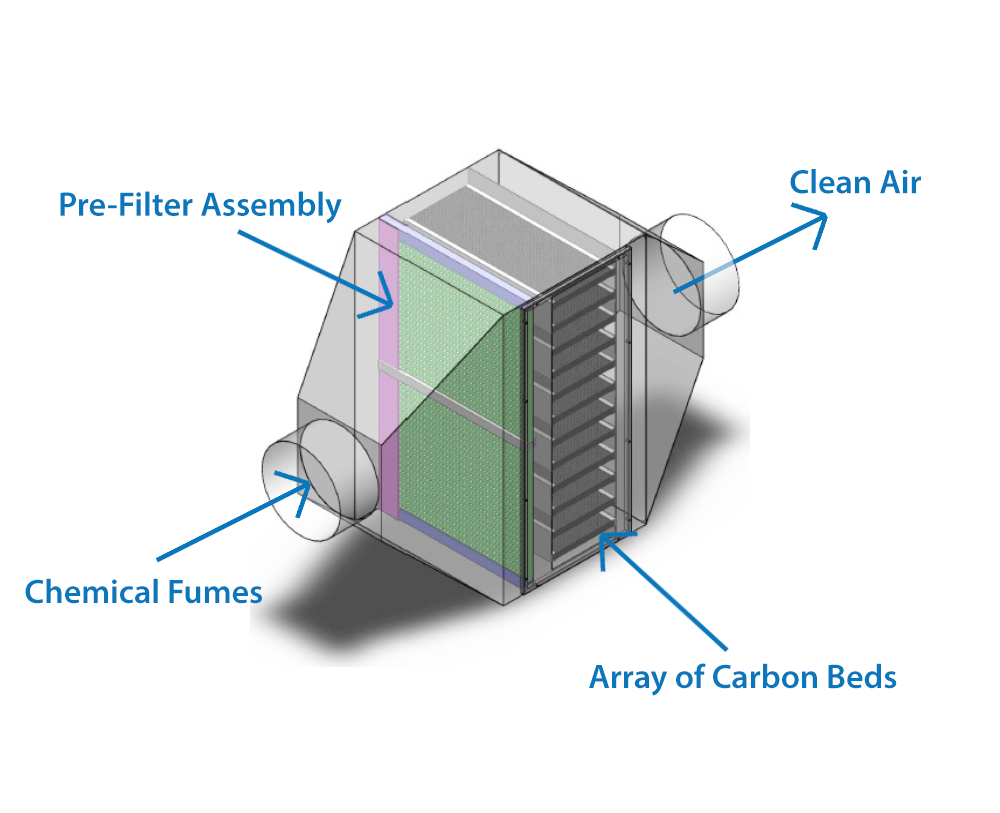
The working principle of dry scrubbers mainly includes the following steps:
- Particle capture: Dry scrubbers allow particles in the exhaust gas to attach to solid surfaces by introducing solid particles or drying chemicals. These particles can be dry alkaline or alkaline earth metal compounds used to neutralize acid gases and trap particles.
- Chemical Reaction: By introducing dry chemicals, dry scrubbers can cause pollutants in the exhaust gas to react with the chemicals. These chemical reactions neutralize acidic gases, thereby reducing their impact on the environment.
- Solid Bed Filtration: Solid bed filtration is often used in dry scrubbers to capture particulate matter. These filters are typically made of ceramic, metal or other materials with high temperature and corrosion resistance to suit specific exhaust gas treatment conditions.
- Circulation System: Dry scrubbers typically include a circulation system that recirculates chemicals or solid particles to improve treatment efficiency.
The advantages of dry scrubbers over wet scrubbers include:
- No wastewater treatment required: Since it operates without liquid water or aerosols, there is no need to process large amounts of wastewater, reducing wastewater treatment problems.
- Suitable for high-temperature exhaust gases: Dry scrubbers are generally suitable for high-temperature exhaust gases because they do not involve liquid water and can operate in high-temperature environments.
- Smaller Equipment Footprint: Dry scrubbers generally require a smaller equipment footprint because they do not involve large amounts of water.
However, dry scrubbers also have some limitations, such as they may be less efficient at removing certain pollutants and may require more frequent waste disposal. Therefore, when selecting exhaust gas treatment equipment, it is necessary to comprehensively consider the advantages and disadvantages of wet and dry scrubbers based on specific exhaust gas components and treatment requirements.
What exhaust gases can a dry scrubber treat?
Dry scrubbers are mainly used to treat industrial waste gas and can effectively remove particulate matter and acidic gases. The following are some of the exhaust gas components that dry scrubbers are typically capable of treating:
- Particulate matter: Dry scrubbers can effectively capture and remove solid particulate matter in exhaust gases, including dust, dust and other particle-shaped pollutants.
- Acid gas: Dry scrubbers are often used to treat acid gases, such as sulfur dioxide (SO2), hydrofluoric acid (HF), hydrogen chloride (HCl), etc. Chemicals in dry scrubbers can react with these acid gases, neutralizing them.
- Nitrogen oxides (NOx): Dry scrubbers may have some treatment effect on some nitrogen oxides, especially with some desiccants or chemical absorbents.
- Volatile organic compounds (VOCs): Dry scrubbers can handle some volatile organic compounds, especially by introducing chemical adsorbents or other adsorption media into the exhaust gas to capture and remove them.
- Odor substances: For some industrial processes that produce odors, dry scrubbers may reduce the emission of odor substances through chemical neutralization or adsorption.

It is important to note that the suitability of dry scrubbers depends on the specific composition and characteristics of the exhaust gas. For exhaust gases containing large amounts of water vapor or other high humidity, a wet scrubber may be more suitable, since dry scrubbers typically do not involve liquid water or aerosols.
